How Do You Start Ultrasonic Spray Coating in a Small Lab?
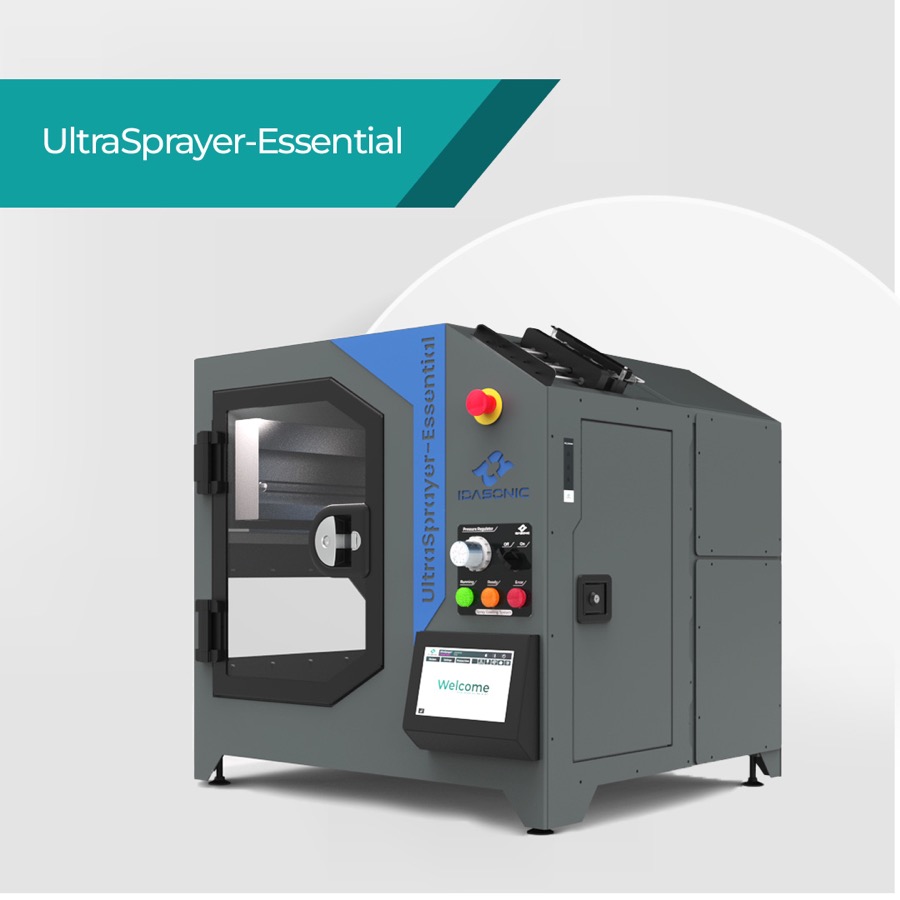
Start with the smallest system that still has the parameters you will actually vary. For ultrasonic spray coating that means three things: more than one liquid channel, a substrate heater that reaches the temperatures your chemistry needs, and the same atomizer technology used in the larger systems, so results transfer when you scale up.
What a first system genuinely needs
Multiple liquid channels. Single-channel systems look like a saving until the first multilayer experiment, or the first time you want to compare two formulations without flushing the line between runs. Three channels is the practical number.
A hot plate that is actually hot. Substrate temperature is one of the strongest levers on film morphology, because it sets how fast the solvent leaves after the droplet lands. A plate limited to modest temperatures quietly restricts which materials you can develop.
Controllable flow across a wide range. Thin films need very low flow rates; thicker functional layers need much higher ones. A system that covers from nanolitres to tens of millilitres per minute will not need replacing when the project changes.
The same atomizer as the bigger system. This is the one people miss. If your desktop unit atomises differently from the production system, your process parameters do not transfer and the development work has to be repeated.
What you can do without at the start
Automated Z-axis motion is convenient but rarely decisive: nozzle height is set during development and then left alone, so manual adjustment costs you minutes, not results. A large working area matters only when substrates get large. A vacuum plate is genuinely useful for thin or flexible substrates, but it can usually be added later.
Buy the parameters you will vary. Skip the conveniences you will use twice.
The first month, practically
Expect to spend it on process development rather than results, and plan for that openly with whoever funds the instrument. A sensible sequence: establish a stable spray with solvent only and confirm the mist pattern; move to your actual solution at a mid-range flow and find the nozzle height that gives a wet but not pooling film; then vary substrate temperature, which usually produces the largest change in morphology; and only then optimise scan speed and path spacing for uniformity. Changing one parameter at a time sounds obvious and is routinely ignored, which is why so many early spray films are inexplicable.
Questions worth asking a supplier
- Will you help establish a first recipe for my material, or does the system arrive as a box?
- What training is included, and does it happen on site?
- If I outgrow this system, do the parameters transfer to your larger one?
- What is the lead time for consumables and spare parts in my country?
That last question is worth more than it looks. An instrument waiting three months for a part is not an instrument.
The UltraSprayer-Essential we represent is built for this stage: three channels, a plate to 500 °C, flow from 17.9 nl/min to 84 ml/min, and the same IdaMist atomizer used in the automated Pro system. We handle installation, training and local support. Write to info@rexerlab.com.