Why Would a Raman Lab Need More Than One Laser Wavelength?
Because the wavelength that produces a clean spectrum on one sample can bury the next one in fluorescence. Raman scattering is weak, and the excitation laser decides how much signal you get, how much fluorescence competes with it, and how deep into the sample you are looking. A single-wavelength instrument quietly limits which samples your laboratory can handle.
Three things the wavelength changes
Signal strength. Raman scattering intensity scales steeply with excitation frequency, so shorter wavelengths return far more signal. A blue or green laser can produce a usable spectrum in a fraction of the acquisition time a near-infrared laser would need on the same sample.
Fluorescence. This is the practical reason most laboratories end up wanting a second laser. Many organic materials, biological samples, minerals and polymers fluoresce strongly under visible excitation, and the fluorescence background can be orders of magnitude larger than the Raman signal you are trying to see. Moving to 785 nm or 1064 nm often removes the problem entirely, at the cost of signal.
Resonance and sampling depth. When the excitation approaches an electronic transition of the material, specific vibrational modes are enhanced dramatically. Choosing the wavelength therefore selects which part of the sample you emphasise. Longer wavelengths also penetrate further into scattering materials, which matters for coatings and layered structures.
Why researchers end up wanting three, not two
A shared research instrument rarely serves one sample type. A group working on 2D materials wants a wavelength on resonance with the layer of interest; the collaborator down the corridor arrives with a fluorescent polymer; a third project needs photoluminescence rather than Raman. Each of these is a different optimum. The practical consequence is that the instrument either constrains the science or the science queues behind the instrument.
The part that is easy to underestimate: alignment
Adding lasers to a Raman system is not simply a purchasing decision. Every wavelength needs its own filters and grating position, and unless the system is designed for it, switching sources means realignment, recalibration, and an afternoon gone. That is exactly why multi-laser platforms are built so that all sources land on the same sample spot and the switch happens in software rather than with an Allen key.
The question is not how many lasers an instrument has, but how much work it takes to change between them.
What to check before you buy
- Do all wavelengths reach the same spot on the sample, or do you re-find your region of interest after each switch?
- Is switching automated in software, including filters, grating and calibration?
- Can further wavelengths be added later, including UV or 1064 nm mounted externally?
- Does the system also handle photoluminescence and lifetime measurement, or will that be a second instrument?
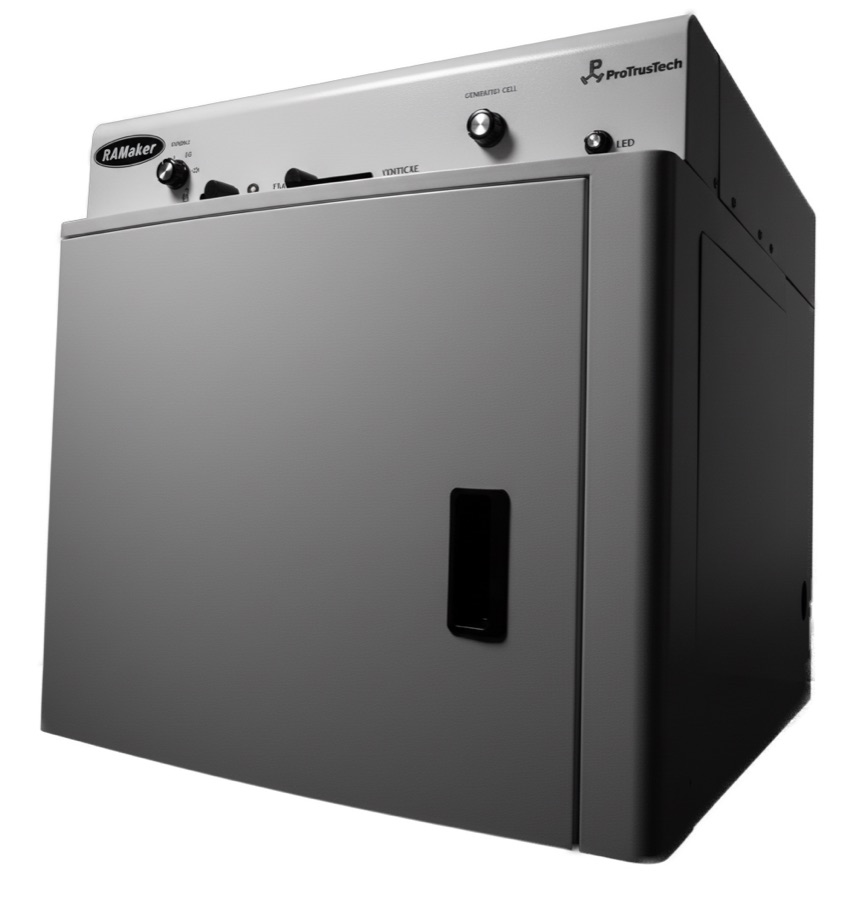
The RAMaker platform we represent is built around this problem: up to six excitation wavelengths onto one spot without realignment, with Raman, photoluminescence and time-resolved measurement in the same chamber. If you would like to talk through which wavelengths your samples actually need, write to info@rexerlab.com.